
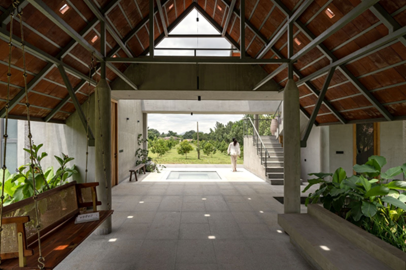
In an era of globalized glass-and-steel boxes, the true future of sustainable architecture may lie in our past. Reinterpreting India’s vernacular palette: terracotta, stone, and timber, is no longer just a nod to nostalgia; it is a technical necessity forclimate-responsive design. Traditional Indian architecture relies on locally sourced materials like mud, stone, wood, terracotta, and thatch, chosen for climate responsiveness and availability.
Regional variations highlight ingenuity, granite in the south, sandstone in arid zones, and bamboo in the northeast, ensuring low embodied energy and cultural resonance. These elements provide natural insulation, breathability, and tactile warmth absent in industrial alternatives. The House by the Grove, designed by Taliesyn situated in rural areas of Bangalore exemplifies this approach by blending Mangalore tile roofs and Kota stone with modern spatial fluidity to bring back the vernacular material harmony.
The Heritage of Resilience: Why Vernacular Materials Still Matter
Contemporary architects reinterpret these materials through refined techniques, such as exposed terracotta tiles for shading, lime plaster for humidity control, and reclaimed wood for structural accents. Stone facades now integrate with glass for light play, while oxide floors and brick jaal is add texture without excess ornamentation. This fusion reduces carbon footprints by prioritising proximity-sourced options over imports.
Bridging Fluidity and Raw Texture
The House by the Grove, a weekend retreat amid farmlands, features an expansive sloping roof in Mangalore tiles; a direct nod to vernacular roofing paired with 2.5m concrete columns for open, shaded verandas. Locally sourced kota stone clads the minimalist master bedroom, complemented by cast-in-situfurniture and earthy interiors that evoke nature. Double-height living spaces with retractable glass walls enhance airflow, while skylights in washrooms frame green views, merging material authenticity with fluid modern living.
Economy, Craft and Well-Being
Reusing vernacular materials cuts construction costs, boosts regional craftsmanship, and aligns with sustainability goals like Vastu-compliant energy flow. These designs foster biophilic connections, improving occupant well-being through natural textures and passive cooling. Taliesyn’s contextual philosophy extends this to urban projects, proving scalable relevance for India’s evolving built environment.