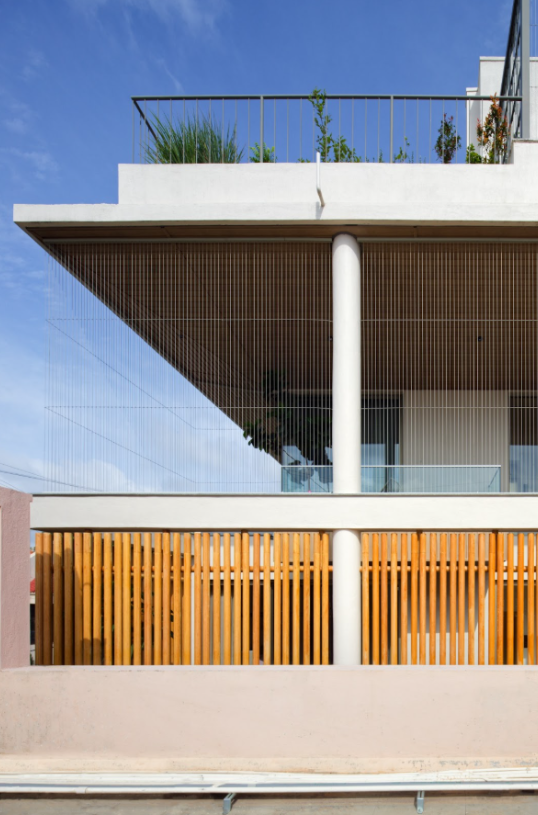
The architecture of any space is shaped by broader conceptual forms and ideas, but it is the small, deliberate choices in architectural details that give character and depth to these spaces. These details become silent architects, transforming materials, light, and proportions into lived experiences. At Taliesyn, details are more than decorative afterthoughts; they are the foundation around which spaces are conceived. The interplay of daylight in a quiet lightwell, the cool edge of a pool, the gentle curve of a staircase; each element creates atmosphere and choreographs movement through the space.
Craft and Context: How Details Transform Space
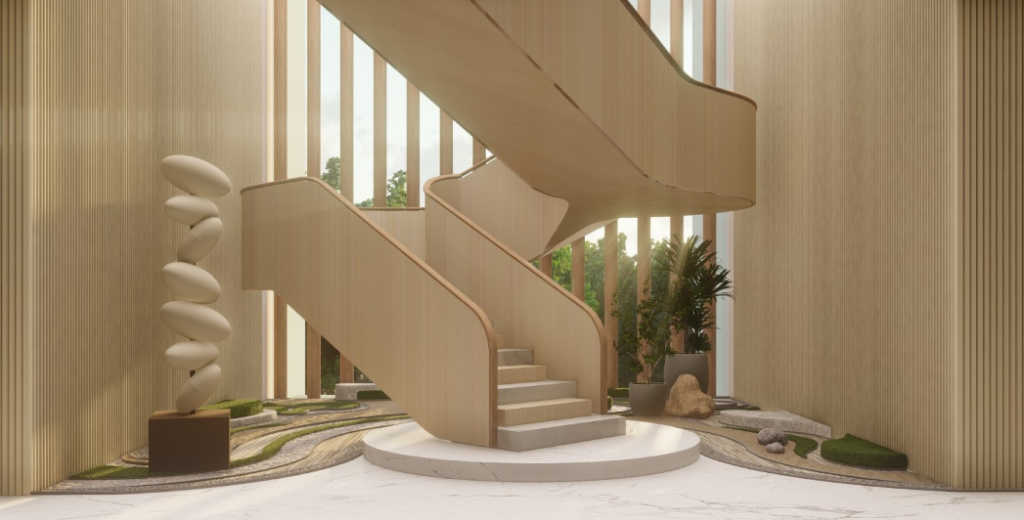
Details are where intention meets craft. In the House of Dialogue in Bangalore, the glass block wall behind the staircase becomes a luminous screen, filtering natural light between two floors while maintaining privacy and visual connection. This permeable boundary doesn’t merely divide space but it transforms light into a living, shifting presence that responds to the time of day. The staircase at Kubos, positioned against an open courtyard, creates a dramatic transition from horizontal openness to vertical ascent. As one moves from the sun-filled courtyard into the double-height stairwell, the shift in scale and light becomes a moment of pause, a threshold that responds to human perception. The skylight detail in the living area of the Manduva House transforms what could be a cave-like sunken space into an airy, light-filled sanctuary, proving that a single opening to the sky can redefine an entire spatial experience.
Human-Centred Design Through Thoughtful Details
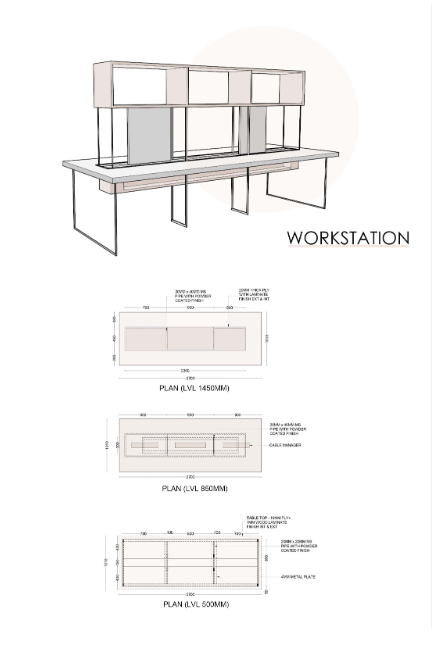
At Taliesyn, every detail is conceived with human experience at its core, the need for warmth, comfort, and connection with nature. The House of Dialogue responds to its immediate urban context through carefully calibrated openings and surfaces. Manduva House harnesses natural light to create comfort in an earth-sheltered dwelling. At the Plegma Office in Bangalore, custom-designed workstations built from metal gridwork and wood do more than furnish the space as they establish a visual rhythm and create opportunities for collaboration, transforming individual work areas into a cohesive, interactive environment.
Impact of Architectural Detail
In architecture, it is often the smallest gestures that resonate most deeply. A strategically placed window, the texture of a handrail, the way light falls across a threshold: these details accumulate into something greater than the sum of its parts. They give spaces a memory and character. When architects honour the power of detail, they create not just buildings, but places that invite reflection, foster connection, and enrich daily life in quiet, enduring ways.