
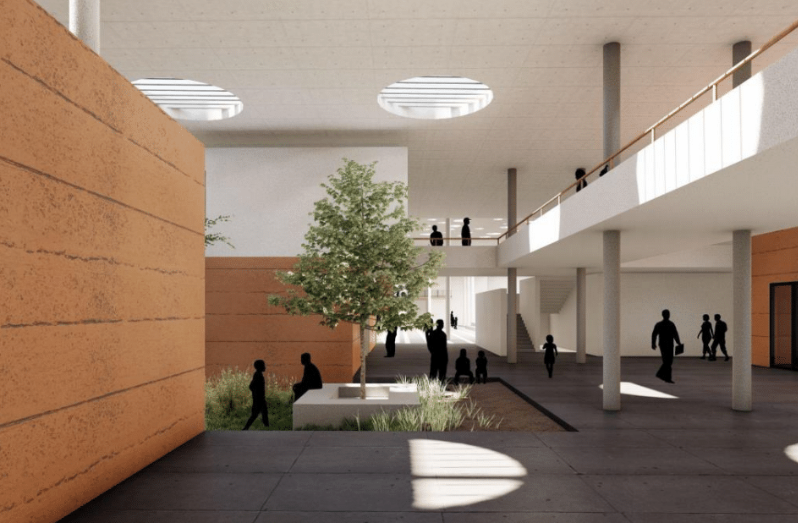
Can a School Building Be a Teacher? Designing for Curiosity and Play Karnataka Public School, Gadiganur, by Taliesyn A school is much more than just a building filled with classrooms; it is a dynamic environment that shapes how children learn, explore, and grow. When designed thoughtfully, a school building can become an active participant in education, teaching silently through its spaces and encouraging curiosity and play-based learning. From safe outdoor areas to inviting informal spaces and comfortable classrooms, every aspect of the environment can foster deeper engagement, creativity, and well-being.
Safe and Comfor table Outdoor Areas
Creating safe outdoor spaces is fundamental for encouraging children to engage in physical activity and social play, which are essential for well-rounded development. When designing comfortable school playgrounds and outdoor areas, attention to natural shading, soft surfaces, and secure boundaries fosters an environment where students feel free to explore and interact confidently. These thoughtfully planned out door spaces extend learning beyond the classroom walls and help children connect with nature while building important life skills like teamwork and problem-solving. Prioritising outdoor learning environments not only supports physical health but also enriches emotional wellbeing, making schools truly nurturing places.
Encouraging Le arning Through Play and Exploration
Not all learning happens at desks. Schools that design flexible, informal learning spaces promote curiosity and self-directed discovery. Cosy reading nooks, interactive walls, and creative maker corners serve as magnets for playful and hands-on learning experiences. This play-based learning environment nurtures children’s natural inquisitiveness, providing opportunities for exploration without rigid structure. By integrating informal learning spaces into the school’s architecture, educators foster a culture of experimentation and collaboration, where students are encouraged to ask questions, test ideas, and learn through doing. This approach makes learning more engaging and meaningful.
Making Classrooms Comfortable with Natural Design
A well-designed school leverages passive design principles—such as ample natural light in classrooms, cross-ventilation, and thermal regulation—to create spaces that are physically comfortable and mentally refreshing. These features reduce reliance on mechanical systems, promoting sustainability while enhancing student focus and well-being. Classrooms that maintain a balanced temperature and fresh air flow help reduce fatigue and distractions. By placing importance on a comfortable learning environment, schools foster conditions where students can thrive academically and socially, making the environment a powerful silent teacher.
Designing schools with the intention that the building itself becomes a teacher transforms the educational experience. When architecture supports safety, exploration, and comfort, it nurtures children’s natural desire to learn and play. A thoughtfully designed school building sparks creativity, strengthens social connections, and empowers learners to grow beyond textbooks—reminding us that sometimes, the most profound lessons come not just from teachers, but from the spaces around us.