
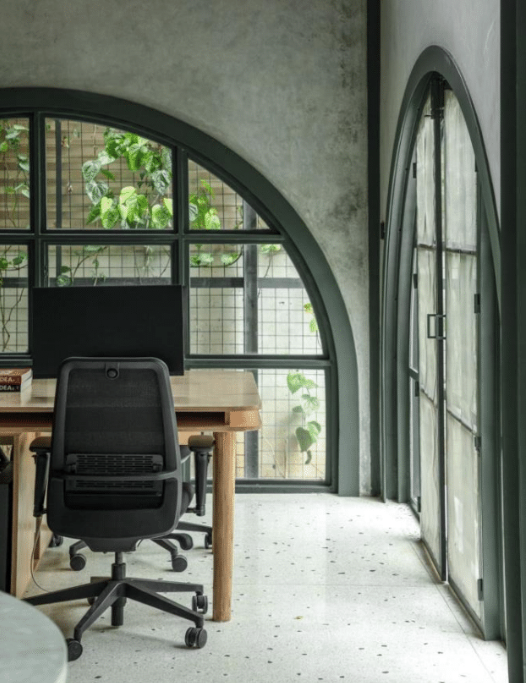
In architecture and interior design, spatial layout shapes how people move through a space, how they feel inside it, and how they interact with others. Whether it’s a school, office, hospital, or cultural centre, layout sets the tone for how a space is used and understood. It’s not just about circulation or structure—it’s about how different zones are defined, how transitions are made, and how spaces support activity, pause, or connection.
Open Plan Layouts: Flexibility, Movement, and Interaction
Open layouts—with minimal walls or divisions—support flexibility and encourage interaction. The yallow different activities to overlap and promote ease of movement. In workplaces, this layout encourages collaboration and team fluidity. In public buildings like museums or libraries, it invites exploration and spontaneity.
For younger users, such as children and teenagers, open layouts create opportunities for group activity and social engagement. They also allow for supervision and visual connection, which is key in educational or recreational settings. Adults benefit from the creative energy and openness, especially in environments that value exchange and co-working.
However, older adults or those with sensory sensitivities might find open spaces over whelming. Noise carries easily, privacy is limited, and visual distractions can make it hard to concentrate or feel calm. Without boundaries, it’s easy to feel disoriented or exposed. So, while open layouts support freedom, they can also create challenges—especially for users who need a clear sense of spatial structure or quiet.
Bringing Clarity Through Defined Layouts
Defined layouts often in the form of partitions, whether fixed walls or movable dividers, bring clarity to a space by separating spaces by their intended function. In clinics, libraries, or studios, these separations help create zones of focus or quiet, where tasks can unfold without constant interruption. Based on the function the space is intended for, defined layouts also offer acoustic control, visual privacy, and a sense of order that many users respond to instinctively.
For older adults, especially those with reduced mobility or cognitive challenges, clear paths andwell-marked zones help with orientation and ease of use. Defined layouts allow people to move with confidence, knowing where each function begins and ends. That said, too much division can make spaces feel closed off or isolating. For teenagers and adults, overly rigid zones can restrict movement or spontaneity. And in public spaces, excessive barriers can reduce visual connectivity, making it harder to feel part of a shared environment.
However, too much division can fragment a space and lead to isolation. It restricts movement and interaction, interrupts visual continuity, and creates dead ends that disconnect one zone from another. As spaces become more enclosed, users lose a sense of orientation and connection. Over time, this limits the informal exchanges that bring energy and ease into a space—making it feel static, disjointed, and harder to inhabit.
Hybrid Layouts Balance Structure with Openness
Designers often find themselves caught between the need for clarity and the desire for flow. Most spaces today try to balance both. Offices combine open areas with breakout rooms or quiet cabins. Schools pair large learning commons with smaller study zones. Libraries mix public reading halls with private nooks. These hybrid layouts allow users to choose how they interact with the space and the people around them.
For families or multi-generational users, hybrid layouts are especially effective. Children can move freely in open play or activity zones while adults or seniors find calm in more private corners. In public settings, hybrid layouts offer inclusivity—different users can find spaces that suit their pace, energy level, or need for privacy.
Soft partitions like shelving units, glass partitions, curtains, or partial-height dividers can carve out zones while keeping a visual connection intact. Whereas, material changes, lighting shifts, ceiling levels, or floor transitions gently guide users without disrupting flow. These design choices help people of all ages feel oriented and supported as they move through space.
Designing a good layout means understanding the function and intent of the space, and thekinds of interactions, separations, or flows it needs to support. Then, it’s about anticipating howpeople will move, where they might linger, and what kind of atmosphere each area shouldhold. By balancing openness with structure, guiding movement without restricting it, and offeringusers the ability to choose how they engage, designers can create spaces that give users the freedom to place themselves where it makes most sense—based on what they’re doing or how they’re feeling. In this way, spatial layout subtly shapes experience—guiding how people navigate, connect, and feel within a space.