
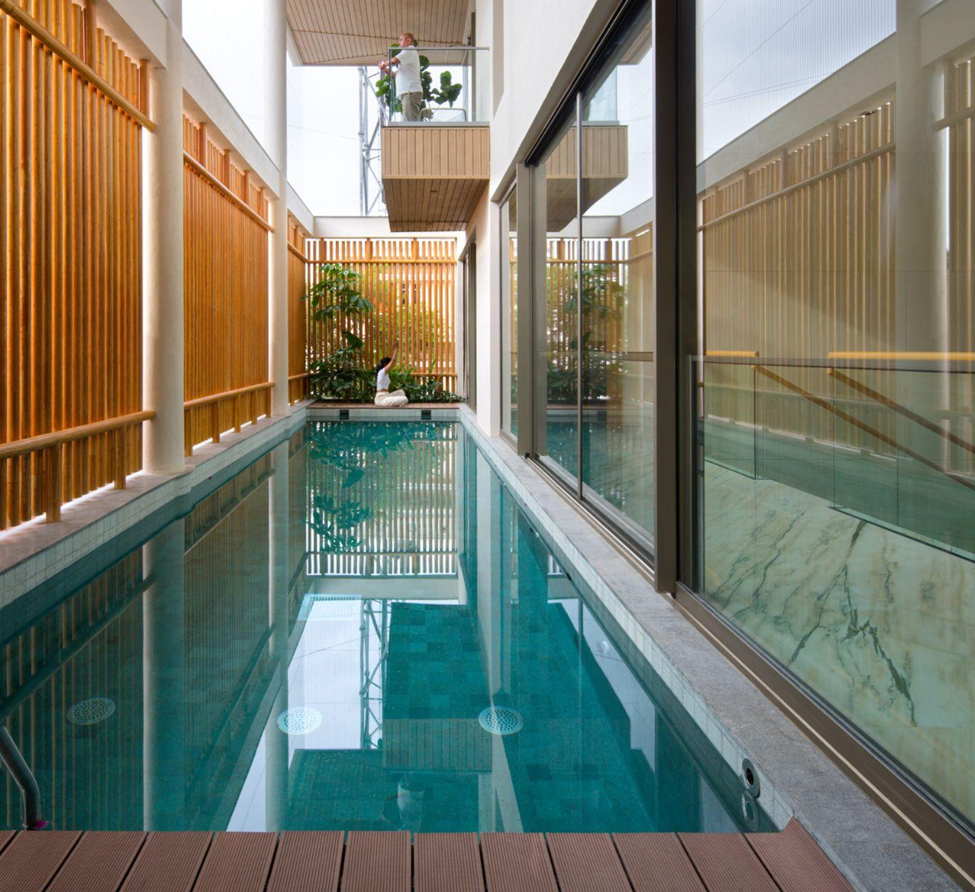
In architecture, water has always held a quiet, transformative power. Its presence shapes how we move, pause, and experience space. When thoughtfully introduced indoors, it transforms the built form into an experience of calm. Confined by spatial boundaries or gently threaded through interiors, water requires careful consideration and intention. At Taliesyn, the integration of water within homes goes beyond aesthetics. It creates microclimates, supports well-being, and brings a deeper connection to nature.
The Emotional Strength of Water as a Living Element
The sound of water moving gently through space brings an instinctive sense of comfort. It tempers the pace of everyday life, softening transitions between indoor activities and moments of rest. In homes where courtyards, atriums, or transitional zones incorporate reflecting pools or small channels, water acts as a visual and acoustic anchor. It makes interiors feel alive yet grounded by adding rhythm and fluidity to the architecture. Beyond these sensory effects, it can function architecturally as a buffer that defines thresholds, separating zones subtly, or guiding movement through a home. Water elements indoors often introduce layers of spatial poetry, where reflections, gentle ripples, and the play of light add depth and nuance to how spaces are perceived.
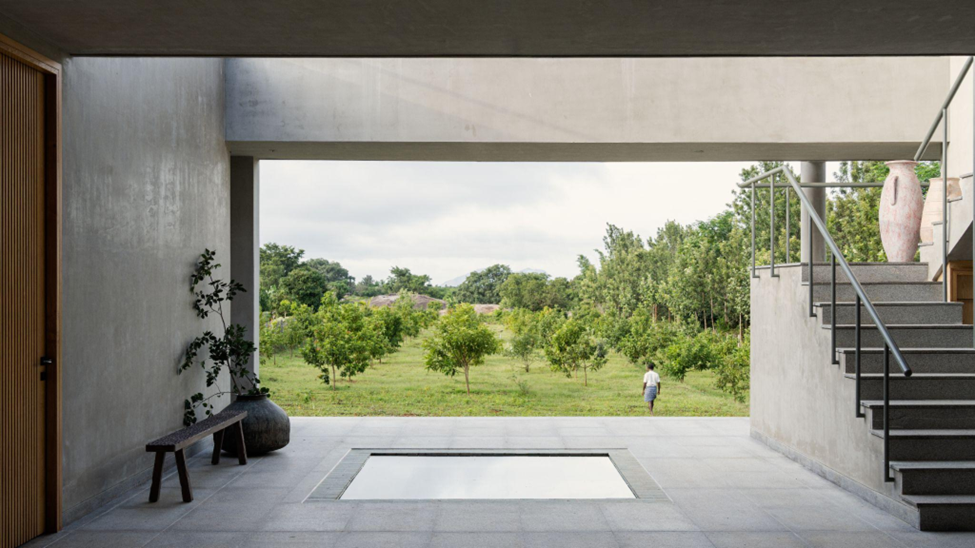
Balancing Climate and Comfort
In warm, tropical climates such as in South India, water serves a functional role alongside its aesthetic presence. Shallow pools, internal channels, or cascading walls help regulate temperature and humidity, cooling air as it circulates through interiors. Placed near openings or skylights, water interacts with natural light, casting reflections and subtle patterns that shift throughout the day. This interplay between water, light, and air creates spaces that feel alive and responsive rather than static, enhancing both comfort and atmosphere.
Material Sensitivity and Detailing
The success of water integration lies in its detailing. Surfaces must with stand moisture while contributing visual and tactile warmth. Stone, terracotta, and textured concrete are often chosen for their durability and ability to age gracefully, acquiring a subtle patina over time. Technical aspects, such as waterproofing, drainage, and acoustic control, are meticulously resolved to ensure both performance and longevity. The attention to these details allows water to feel integrated rather than appended, making it a natural part of the interior fabric.
More than a design feature, water introduces a living dynamic to interiors. It mirrors the sky, responds toa breeze, and carries faintechoes of movement through space. Its presence connects inhabitants to natural rhythms, fostering moments of pause and reflection. In this way, the integration of water indoors becomes a quiet expression of biophilic design, all while shaping experiences, guiding movement, and revealing the poetry inherent to the architectural space.