
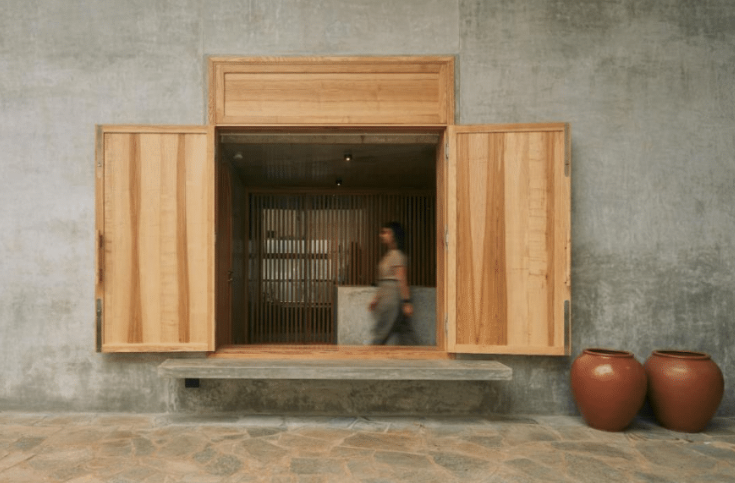
Design doesn’t always have to reach far to go deep. Sometimes, the most intelligent and soulful solutions are found right beneath our feet. Local materials such as laterite, mud, lime, timber, and stone offer more than just rustic charm. They age well, perform beautifully, and often come with skilled hands that know exactly how to work with them. For architects and clients alike, using local materials isn’t just about sustainability or aesthetics, but a deliberate choice that makes architecture more affordable, more contextual, and more connected.
Cutting t he Distance, Saving the Cost
Every imported material brings with it an invisible price tag of freight charges, storage costs, delays,and the added time it takes to install unfamiliar systems. Local materials skip all that.
When bricks are made from the site’s earth, or when timber is sourced just a few kilometres away, the cost savings are immediate. There’s less packaging, less transportation, fewer middlemen, and lower carbon emissions. Even timelines become shorter, since sourcing and approvals move faster.
Local Know - How
One of the best-kept secrets of cost-effective design is using materials the local workforce knows intimately. Craftspeople who’ve worked with stone, mud, wood, or handmade tiles for generation know exactly how to handle them. When the material and the maker speak the same language, work flows faster, with fewer mistakes and less wastage. That ease reflects in the final space, where the walls feel more honest and finishes carry a human touch.
Material That Performs Over Time
The right material doesn’t just save money at the start, but it keeps giving back. Local stone and lime plaster, for instance, naturally regulate temperature, reducing dependence on mechanical cooling or heating. This means smaller energy bills, less need for insulation layers, and a far more comfortable indoor environment. Beyond the immediate construction phase, these materials also tend to require less maintenance. They’re used to the local weather and age well, saving money year after year.
Materials that have existed in the landscape for centuries often carry the wisdom to endure it. To build with local materials is to let the building speak with empathy for the environment, craft, and context. Somewhere in that process, buildings stop being just structures and become stories, told through soil, light, texture, and time.