
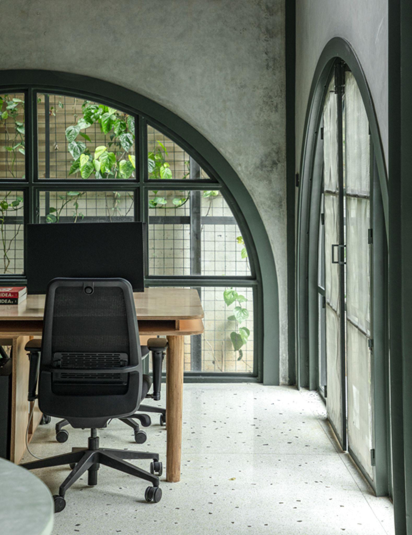
The hybrid work model is no longer just a trend but a norm. As the mode of work evolves, the need to design adaptable workspaces arises. Designing flexible workspaces for the hybrid era requires striking a balance between functionality and employee experience. It demands environments that are adaptable,technology-driven, and human-centric, catering to diverse workstyles while fostering a sense of community. It is time to rethink the traditional office setup and explore ways to evolve beyond its prerequisites.
Reimagining the Office as a Creative Hub
To begin with, one has to redefine the role of an office. In a hybrid setup, the office is no longer thedefault place for work,but rather a collaborative hub for innovation and social connection. This shift inpurpose necessitates a move away from assigned desks and rigid cubicles toward shared spaces that canbe easily reconfigured based on the team’s needs. Explore avenues forvarious zones tailored to specificactivities, such as quiet areas for focused work, open lounges for informal meetings, and tech-enabledrooms for virtual collaboration. The goal is to provide employees with a variety of settings that encouragethem to select the most suitable environment for the task at hand.
Versatility of Modular Design
Ergonomics also plays an important role in designing an adaptable workspace. Modular furniture can beused in multiple ways and repurposed according to the needs of the space, accommodating everythingfrom large team brainstorming sessions to solo, deep work. Movable walls, foldable desks, and stackableseating options support the ever-changing demands of hybrid teams. It also paves the way for meaningfulcollaboration,inclusivity, and accessibility, supporting employees with diverse work styles, needs, andphysical abilities to come together and work effectively.
The office remains a hub for building relationships and reinforcing company culture. Social spaces, such as communal kitchens or game areas, foster informal interactions that spark creativity and camaraderie. Ultimately, designing flexible workspaces for the hybrid era is about creating environments that empower employees, foster connections, and drive innovation. It is not a one-time initiative, but an ongoing process of experimentation, feedback, and adaptation